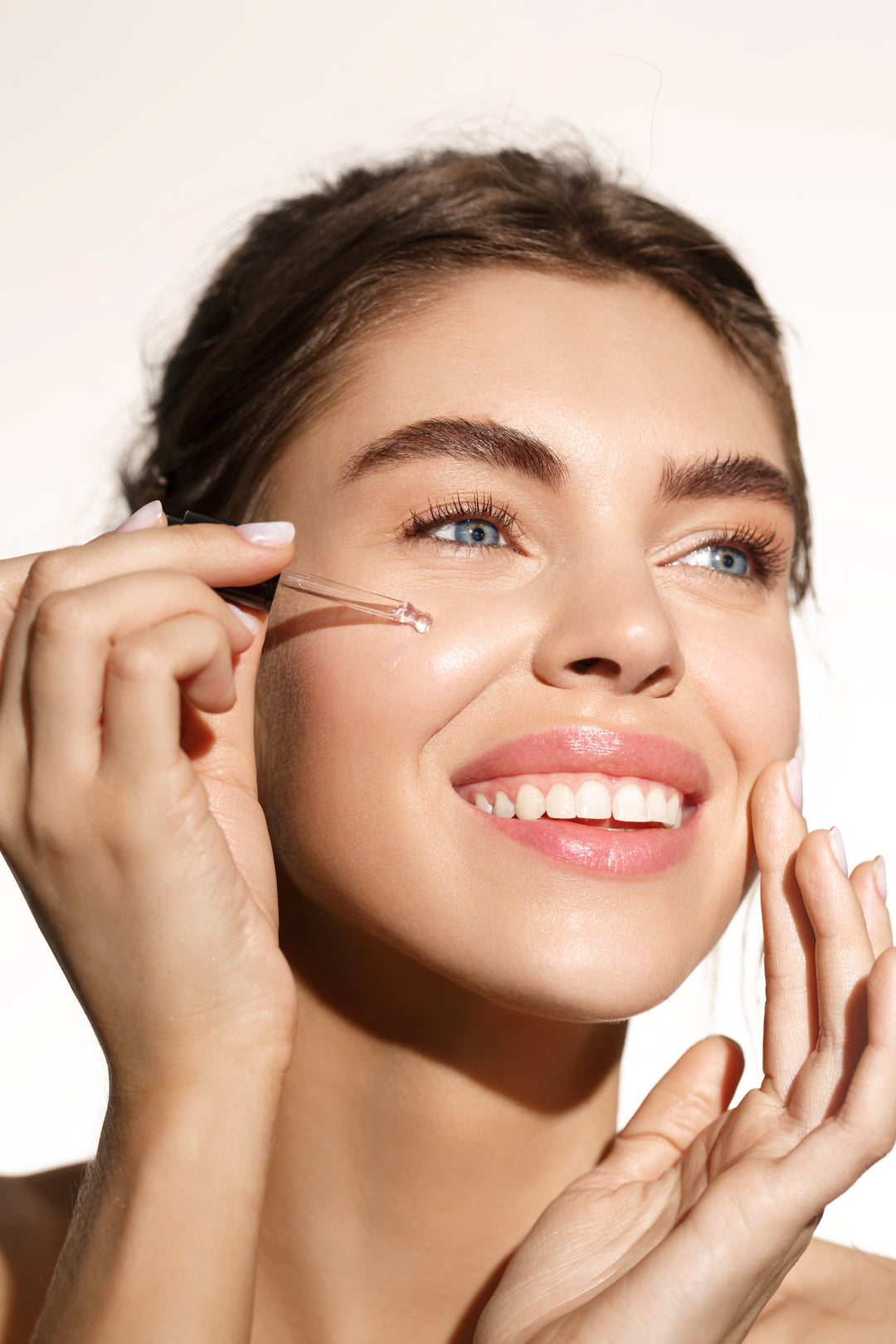
A face mask is a concentrated step you add to your routine now and then, and the right one depends on what your skin is asking for. A sheet mask gives a quick drink of moisture. A clay mask absorbs excess oil and is made for combination and oily skin. A cream mask comforts skin that feels dry or tight. An overnight mask works as a richer final step while you sleep. Below is how each type works, who it suits, how often to use it, and the masks we would choose for each.
Which Face Mask Suits Your Skin?
- Skin that looks tired or feels thirsty: a sheet mask.
- Oily or combination skin, or a shiny T-zone: a clay mask.
- Dry, tight or easily unsettled skin: a cream mask.
- Skin that wants more comfort than your night cream gives: an overnight mask.
Two can share one session: clay on the T-zone, cream or a sheet on the cheeks.
Sheet Masks
A sheet mask is a single-use fabric shape soaked in a serum or essence. The sheet holds the formula against the skin for the time on the pack, so the skin stays moist rather than the liquid evaporating. Most are light and gentle, which makes them the easiest mask to start with. Smooth the sheet on after cleansing, leave it for the time stated, then pat in what remains. There is nothing to rinse.
How often: one to three times a week is a comfortable rhythm for most skin, and each pack's own directions come first.
Benton's Aloe Soothing Mask Pack pairs aloe vera with Camellia sinensis leaf water and sodium hyaluronate in a single 23 g sheet. Iroha's Hydra Calm Face Sheet Mask is made for sensitive skin, with oats and hyaluronic acid. Guerlain's Abeille Royale Honey Cataplasm Mask uses a biocellulose sheet that sits on the face like a second skin, with honey and royal jelly in its formula, for skin that wants hydration and a smoother look. All Natural's Houttuynia Cordata Sheet Mask places Houttuynia cordata extract on a sheet made from eucalyptus wood fibre, with sodium hyaluronate and panthenol.
- Aloe Soothing Mask Pack Sheet Mask
- Hydra Calm Face Sheet Mask
- Abeille Royale Honey Cataplasm Mask
- Houttuynia Cordata Sheet Mask
Clay Masks
Clay masks are built on absorbent minerals, most often kaolin, a soft white clay, and bentonite. As the mask sits on the skin, the clay takes up excess surface oil, so skin looks less shiny and pores look clearer for a time afterwards. They suit oily and combination skin best. Dry skin can use one too, but only where it is needed, usually the forehead, nose and chin. Apply an even layer to clean, dry skin, keep it away from the eyes, and rinse before it dries to a tight, cracked layer; a few minutes is often enough.
How often: once or twice a week for oily skin, less for combination skin. Follow with your usual moisturiser.
Avène's Cleanance Detox Mask is made for sensitive, blemish-prone skin, with kaolin and clay in Avène thermal spring water and fine perlite particles, for a matte finish. Institut Esthederm's Intensive Propolis+ Kaolin Purifying Mask combines its two named ingredients for clogged pores and blackheads; its ingredient list also includes salicylic acid, so count it alongside any other exfoliating step that week. Klorane's mint and clay mask comes as a solid stick, so you can apply it precisely where it is needed, with kaolin and water mint, and suits combination to oily skin. Origins' Clear Improvement Active Charcoal Mask to Clear Pores combines charcoal powder with kaolin and bentonite, and rinses away with warm water.
- Cleanance Detox Mask
- Intensive Propolis+ Kaolin Purifying Mask
- Organic Mint and Clay Purifying Stick Face Mask
- Clear Improvement Active Charcoal Mask to Clear Pores
Cream Masks
A cream mask is a richer cousin of your moisturiser, applied in a generous layer and left for a short while. Butters and oils soften, while humectants, ingredients such as glycerin and hyaluronic acid that draw water into the skin, help it feel more comfortable. Cream masks suit dry, tight or easily unsettled skin, and any skin in the colder months or after a day in heated rooms. Most are removed with a damp cloth or a rinse.
How often: once or twice a week, or more often when skin feels dry. They are gentle enough to use the day after a clay mask.
Annayake's Hydrating Nutritive Face Mask pairs illipe butter with rice bran oil; the house suggests 10 to 15 minutes, once or twice a week, and it is one of a collection of four masks designed to be used alone or combined. Chanel's Hydra Beauty Camellia Repair Mask is a balm texture with camellia oil, shea butter and sodium hyaluronate. Rilastil's Aqua Moisturising Mask is a fresh gel-cream with two forms of hyaluronic acid, ceramides and evening primrose oil, rinsed off with lukewarm water. Sensai's Comforting Barrier Mask is designed for skin that feels dry or easily unsettled, with squalane and cholesterol in its formula, and is used in the evening.
- Hydrating Nutritive Face Mask, Cream
- Hydra Beauty Camellia Repair Mask Face Mask
- Aqua Moisturising Mask
- Comforting Barrier Mask
Overnight Masks
An overnight mask, often called a sleeping mask, is a leave-on treatment you apply as the last step of your evening routine. Because it stays on for hours, it is made to settle into the skin rather than sit on top of it. It suits skin that feels dry or tired by morning. Apply an even layer to clean skin, avoid the eye area, and cleanse as usual in the morning.
How often: one to three nights a week is a good place to begin; some are designed for regular nightly use, so let the pack guide you.
Payot's My Sleep & Glow Radiance-Boosting Night Mask is a gel with sodium hyaluronate and pomegranate, goji and açaí extracts. Laboratoires Filorga's NCEF-Night Mask is a fast-absorbing cream the house directs as the final step of the evening, left on overnight, with squalane and sweet almond oil in its formula. Sisley's Velvet Sleeping Mask with Saffron Flowers is made for skin that feels dry or depleted, with shea and kokum butters, macadamia oil, honey and saffron flower extract. Jeanne Piaubert's Divinskin Rejuvenating Sleeping Mask is a gel-cream applied in the evening, avoiding the eye contour.
- My Sleep & Glow Radiance-Boosting Night Mask
- NCEF-Night Mask Night Mask
- Velvet Sleeping Mask with Saffron Flowers
- Divinskin Rejuvenating Sleeping Mask
Before You Mask
- Cleanse first, so the mask sits on clean skin.
- Try a new mask on a small area, such as the side of the jaw, before using it on your whole face.
- Leave it on only for the time the pack gives.
- Count masks with acids or exfoliating grains among your exfoliating days.
- If a mask stings or leaves skin red, rinse it off with lukewarm water. If skin is broken, or irritation does not settle, ask your pharmacist or doctor.
For exfoliating masks, scrubs and peels, read How Often to Exfoliate Your Face: Scrubs, Enzymes and Acids. To see where a mask fits among the other steps of a layered routine, read Korean Skincare: The Steps and How to Build a Routine.
In Short
Sheet masks are for quick moisture, clay masks for oil and shine, cream masks for comfort, and overnight masks for a richer night. Choose by what your skin needs this week rather than by habit. If you begin with one, make it a cream or sheet mask once a week, and add a clay mask on the T-zone only if shine is your concern.